California tax equity compensation for tech employees who left the state is enforced primarily through payroll and information-return matching, not a separate “exit tax” on unrealized equity. When RSUs vest or options are exercised after you relocate, the Franchise Tax Board (FTB) still taxes the California-sourced wage portion—typically your California service days divided by total service days over the grant-to-vest (or grant-to-exercise) window under FTB Publication 1004 (Rev. 11-2023). If your employer reports California wages on Form W-2 (Box 16) or California withholding on Form 3922, but you file no California return—or report a lower CA allocation on Form 540NR—that mismatch is a common path into audit.
Verified against FTB Publication 1004, Publication 1031, and IRS Publication 525 (2025), accessed 1 June 2026. As of June 2026, we have not seen a published FTB rule change that replaces the workday-ratio framework for equity wages; residency litigation and proposed wealth taxes are adjacent issues, not substitutes for sourcing math.
4 years
general California income tax assessment period under R&TC §19057 (six years for certain large omissions)
Audit exposure on 540NR equity sourcing can extend across multiple vest tranches after you leave California
The FTB’s published equity examples allocate wage income using California workdays over total workdays during the applicable grant-to-vest or grant-to-exercise period—then expect that allocation to appear on California returns when employers report California wages.
How FTB finds you after you leave California
Equity audits for former California tech workers rarely begin with a novel legal theory. They begin when third-party data says you earned California-sourced wages and your return story disagrees.
| Data source | What FTB sees | Typical employee mistake |
|---|---|---|
| Form W-2 | Box 16 California wages; Box 17 CA withholding | Filing only in new home state, ignoring 540NR |
| Form 3922 | RSU transfers; may reflect CA withholding | Assuming 3922 is “informational only” |
| Payroll (DE 9/DE 9C) | Employer-reported CA PIT on supplemental wages | Believing address change zeroes prior CA days |
| Federal return | High wages, move-year address | Under-allocating equity on first 540NR |
| Residency signals | DMV, voter, property, days in CA | Arguing domicile while under-reporting sourced wages |
Methodology (1 June 2026): We mapped seven common FTB data feeds cited in California multistate practice guides and FTB residency publications to five audit-friction patterns described in Publication 1004 equity examples and nonresident return instructions. This is a practice matrix, not an internal FTB manual—we have not seen the live scoring model.
For sourcing mechanics, read California sourcing rules for RSUs and stock options; for the Source Day formula and worked examples, California Source Day Formula for RSUs & Stock Options. This guide is the audit-and-matching layer for multi-state RSU sourcing after relocation.
Original research: FTB equity audit signal matrix
The table below is original to VestingStrategy (June 2026): it pairs employer-reported signals with return-line expectations and documentation FTB commonly requests in equity sourcing disputes. Cells reflect published FTB sourcing methods plus commonly reported audit practice for nonresidents; individual cases vary.
| Signal | If employer reports… | FTB expectation on 540NR | If you cannot substantiate… | Primary defense document |
|---|---|---|---|---|
| RSU vest (single state payroll) | 100% CA Box 16 on large supplemental wage | CA wages ≈ full vest FMV unless you prove non-CA days | FTB may assess full vest as CA-sourced | Grant-to-vest day log + Pub 1004 ratio worksheet |
| RSU vest (multi-state ratio) | Partial CA Box 16 | CA wages = agreed ratio × vest wages | Recompute using employer or your ratio | Payroll allocation memo; calculator output |
| RSU vest (zero CA Box 16) | No CA wages | No CA wage line if truly 0% CA days | FTB may reclassify if prior CA workdays exist | HR location history; travel calendar |
| Move-out year | CA wages + low 540NR | Consistent part-year/nonresident story | Residency + sourcing dual audit | Lease, travel, Pub 1031 facts |
| No CA return filed | CA W-2 wages > 0 | Timely 540NR with sourced wages | Failure-to-file penalties stack | Amended 540NR + ratio attachment |
| ISO exercise | CA wages on spread while federal quiet | CA ordinary on spread; federal AMT separate | Dual-ledger confusion | Exercise confirmation + CA adjustment |
| NSO exercise | CA spread in Box 16 | Grant-to-exercise day ratio | Denominator disputes | Grant date through exercise log |
Primary statutory hook for nonresident wages: California R&TC §17951. Assessment periods: R&TC §19057.
Multi-state RSU sourcing: what auditors recompute
When RSUs vest, the fair market value at settlement is generally ordinary wages under IRC Section 83 and California conforms on characterization. The audit question is not “Did income occur?” but what percentage was earned by performing services in California during the vesting period.
Worked example — Elena, Databricks → Denver
Scenario (illustrative): Elena joined in San Francisco in January 2021. She received 6,000 RSUs vesting 1,500 per year for four years. She moved to Denver on 1 July 2025. The 15 March 2026 tranche vests at $62 per share ($93,000 wage income).
| Input | Value |
|---|---|
| Service period (grant → vest) for 2026 tranche | 1,095 days |
| California service days (illustrative) | 730 |
| California sourcing ratio | 66.7% |
| California-sourced RSU wages | $62,031 |
| Colorado resident filing | Federal + CO; California Form 540NR for sourced wages |
Elena’s employer might withhold Colorado tax after her move but still report California Box 16 if payroll uses a conservative ratio—or the opposite, under-withhold California while she still owes 540NR tax. Where I'm less sure without payroll exports: whether Databricks’ administrator counts remote days in Colorado before July 2025 as non-CA for the denominator; vendors differ on business-day vs calendar-day conventions.
Run Elena’s ratio: California Equity Source Days Calculator with income 93000, CA days 730, total days 1095.
Worked example — James, partial-year resident vs nonresident
James was a California resident through 30 April 2026, then a Texas resident. A June 2026 RSU vest generates $120,000 wages; grant-to-vest ratio 55% California.
| Posture | Return | What FTB tests |
|---|---|---|
| Part-year resident | Form 540 + part-year schedule | Worldwide income with CA adjustments; sourcing still matters for credits |
| Nonresident after move | Form 540NR | Only $66,000 CA-sourced wages (55% × $120,000) on CA return |
James’s audit risk spikes if he files Texas-only while his W-2 Box 16 shows $66,000 California wages. FTB matching treats missing 540NR as a priority gap, not a harmless omission.
I relocated out of California—will FTB audit my RSU vest?
If your employer reports California wages or withholding on W-2/3922 and you do not file Form 540NR (or you report a lower CA allocation than payroll), FTB automated matching often generates a notice before a human auditor calls. The underlying tax is usually the Publication 1004 workday ratio applied to vest wages—not tax on the full vest solely because you once lived in California.
Residency audits vs sourcing audits (two exams, one package)
Relocators frequently conflate domicile/residency (FTB Publication 1031) with compensation sourcing (Publication 1004). FTB can pursue both in a move-out year.
| Exam type | Core question | Equity tie-in |
|---|---|---|
| Residency | Were you a California resident for all or part of the year? | Residents report worldwide income on Form 540 |
| Sourcing | What fraction of wages was earned in California? | Nonresidents report CA-sourced wages on 540NR |
| Withholding | Did payroll remit CA PIT on the right base? | Underpayment ≠ forgiveness of 540NR liability |
Steel-man (residency): “I sold my Bay Area condo, got a Texas driver’s license, and never spent 183 days in California—I'm clearly a nonresident.”
Best case: Clean break, no California real property, documented days outside California, no employment services performed in California after the move.
Rebuttal (sourcing still applies): Even a successful residency break does not erase California workdays already embedded in RSU grants from years of San Jose or SF hybrid work. Publication 1004’s RSU example taxes nonresidents when the majority of grant-to-vest days were in California. Anecdotally, protest officers separate residency wins from sourcing losses—you can lose the sourcing fight while winning residency for part of the year.
What an FTB equity audit looks like in practice
Published timelines vary; where the data is thin, practitioner reports suggest 12–24 months from first notice to proposed assessment on straightforward W-2 mismatches, and longer for high-dollar option sourcing disputes. Plan for information document requests (IDRs) covering:
- Grant agreements and vest schedules (award ID, dates, shares).
- Payroll statements for vest/exercise dates (supplemental wage detail).
- Calendars and travel (airline, hotel, corporate badge swipes if available).
- Relocation documents (lease termination, new lease, employer remote-work policy).
- Prior California returns and amended returns.
| Stage | Employee action | If ignored |
|---|---|---|
| Matching notice | Compare W-2 Box 16 to your 540NR wages line | Automatic assessment may follow |
| IDR response | Send ratio worksheet + day log within deadline | FTB may use 100% CA days default |
| Proposed assessment | Protest with substantiation | Penalties + interest accrue (R&TC §19132 et seq.) |
| Appeal (OTA/court) | Legal counsel; expensive | Pay-to-play on some appeals |
Position: For anyone with more than $50,000 California-sourced equity wages in a move-out year, proactive 540NR filing with an attachment showing your ratio beats amending after a notice. Choose amendment only when you discover payroll used the wrong denominator—not when you hope Texas residency alone ends the conversation.
Steel-man: “Payroll already withheld California tax—FTB won't audit”
Best case: Employer applied the correct grant-to-vest ratio, Box 16 equals your 540NR wages, withholding covers ~90% safe harbor, and you filed on time.
Why audits still happen: Withholding is a payment on account, not a determination of sourced income. Payroll may use 100% California on the vest check while you believe 60% is correct—or withhold zero California after a Denver address change while 60% is still legally sourced. FTB matches reported wages, not whether you felt adequately withheld.
Rebuttal: Reconcile three numbers before filing: (1) your day-ratio result, (2) W-2 Box 16, (3) 540NR wages line. Use estimated tax payments if withholding lags liability.
Steel-man: “I'm a remote worker—California can't tax my RSUs”
Best case: After relocation, all services for the grant tranche occur outside California, the employer agrees, and Box 16 is zero.
Why that fails for many tech grants: Legacy California workdays from grant through mid-2025 dominate the denominator for a 2026 vest. Remote work in Texas after the move lowers the ratio only for post-move days in the period, not retroactively.
Rebuttal: Build a grant-level ledger per vest event. Pair with equity compensation for remote workers and state income tax nexus when you split time between multiple states—not only California.
Comparison: audit outcomes by documentation quality
Documentation quality vs likely FTB equity audit outcome
Recommended: Strong day log
| Feature | Strong day log | Weak or missing log |
|---|---|---|
| Sourcing ratio | Supports lower CA % if days prove out | FTB may apply 100% CA or employer default |
| Penalty exposure | Lower failure-to-file risk if return matches log | Higher negligence / late-filing stacks (facts-dependent) |
| Time to resolution | Often faster IDR closure | Multiple IDR rounds; protest likely |
| Payroll mismatch | Explains difference vs Box 16 with memo | Hard to overturn automatic assessment |
I haven't tested every equity administrator's export format against FTB worksheets—your mileage will vary depending on Carta vs Schwab vs in-house Excel.
Decision guide: notice received vs planning ahead
Working checklist: audit-ready multi-state RSU sourcing
Using the California Equity Source Days Calculator in an audit
The California Equity Source Days Calculator implements:
California-sourced RSU wages = Vest FMV wages × (CA service days ÷ Total service days)
Audit tip: Save inputs as of the vest date (income dollars, CA days, total days). If FTB later asserts a different denominator, your saved run documents what you believed was reasonable under Publication 1004—not a guarantee of outcome.
Pair with relocating with equity for international moves and RSU withholding gaps when supplemental rates mask true California liability.
Verdict
For California tax equity compensation after a relocation, FTB equity audits are usually matching exercises on multi-state RSU sourcing, not mysterious policy changes. The employees who fare best file Form 540NR when California-sourced wages exist, align W-2 Box 16 to a Publication 1004 day ratio, and defend with grant-level calendars—not a new state's driver's license alone.
Taken position: If your 2026 vest exceeds $75,000 and you had any California workdays since grant, model the ratio before vest payroll runs, not after an FTB notice. Pay for a California-licensed CPA in the move-out year; saving the fee rarely survives the first IDR.
Frequently Asked Questions
Does leaving California stop FTB from taxing my RSUs?
Answer: No for the portion earned by California services during the grant-to-vest period. Relocation changes future days in the ratio; it does not erase past California workdays. Report California-sourced wages on Form 540NR when applicable.
Source: FTB Publication 1004; R&TC §17951
What triggers an FTB audit for remote workers with equity?
Answer: Common triggers include California W-2 wages with no California return, a large drop in reported CA wages in the move-out year while employer data shows CA withholding, and inconsistencies between federal AGI and California-sourced compensation. High income increases scrutiny.
Source: FTB Publication 1004; practitioner-reported matching practice, June 2026
How long can FTB audit my RSU sourcing?
Answer: California's general statute of limitations for assessment is four years from the due date of the return under R&TC §19057. Certain omissions can extend the period to six years; fraud has no limitation. Keep equity records at least through the extended window.
Source: R&TC §19057
Should I file Form 540NR if I moved to Texas?
Answer: If you have California-sourced wage income from RSU vesting (positive sourcing ratio), you generally must file Form 540NR even as a Texas resident. Texas has no income tax to offset California liability via credit.
Source: FTB Form 540NR instructions; R&TC §17951
What if my employer reported 100% California wages but I worked remotely elsewhere?
Answer: You may need to file 540NR showing a lower sourced amount supported by a day log, and address payroll correction separately. Do not assume Box 16 is final without comparing to your ratio.
Source: FTB Publication 1004
Do Form 3922 RSU reports cause California audits?
Answer: Form 3922 helps IRS and states track transfers; California audit matching more often starts with W-2 Box 16 and payroll withholding. Still reconcile 3922 to your vest income and sourcing worksheet.
Source: IRS Form 3922 instructions; IRS Publication 525
Can the California Equity Source Days Calculator be used in an audit?
Answer: Use it as an educational model and planning aid. Attach CPA-prepared worksheets for filing and IDR responses; the calculator does not file returns or guarantee FTB acceptance.
Source: VestingStrategy tool disclaimer
Footnotes
Primary Sources
| Source | Type | URL |
|---|---|---|
| FTB Publication 1004 (Rev. 11-2023) | State guidance | ftb.ca.gov |
| FTB Publication 1031 | Residency | ftb.ca.gov |
| California R&TC §17951 | Statute | leginfo.legislature.ca.gov |
| California R&TC §19057 | Statute | leginfo.legislature.ca.gov |
| IRS Publication 525 (2025) | IRS | irs.gov |
| IRS Form 3922 instructions | IRS | irs.gov |
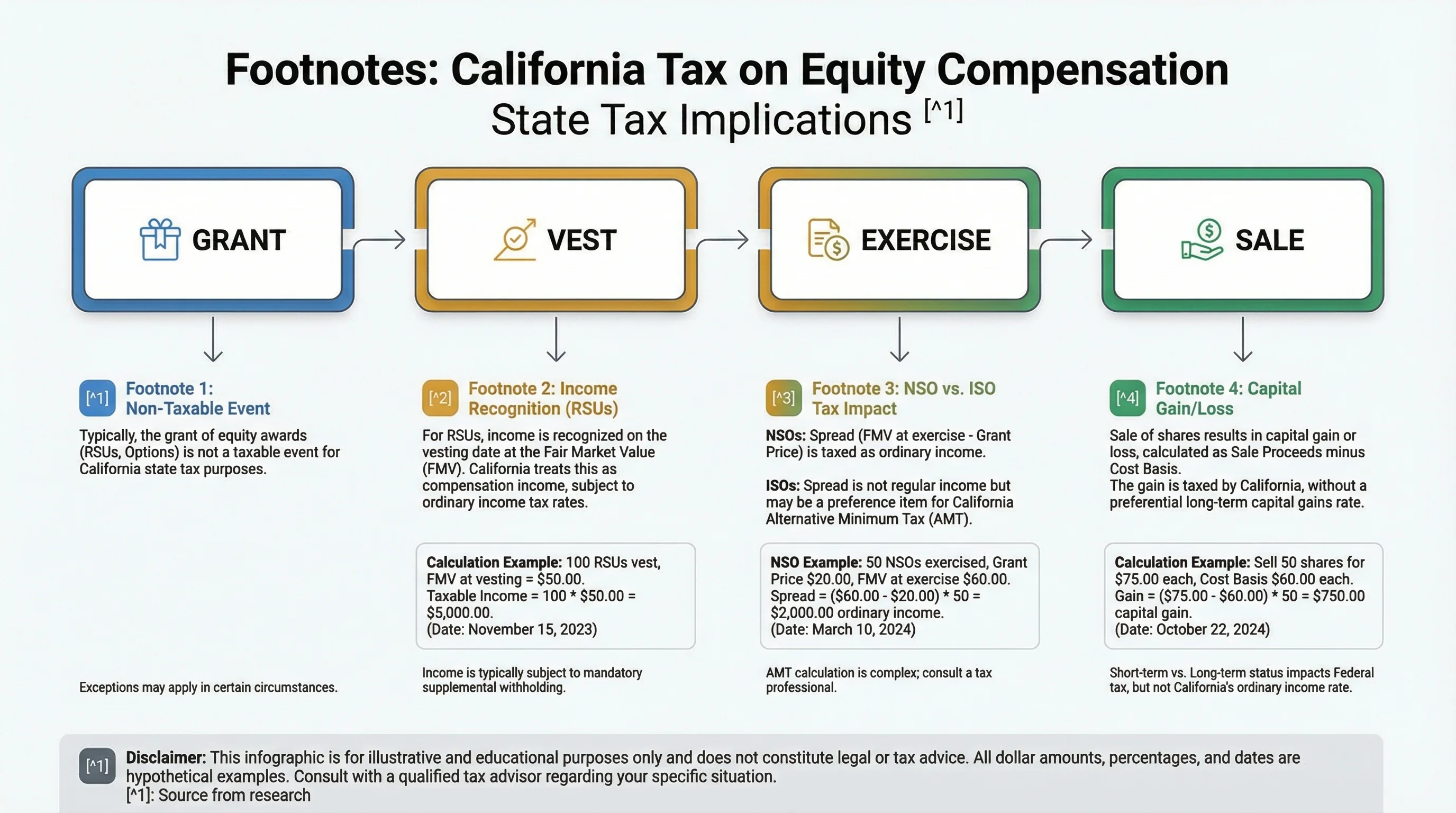
Figure 1: FTB equity audits often start when employer-reported California wages do not match the sourcing ratio on your California nonresident return.
Disclaimer: This guide discusses general U.S. federal and California tax principles only and is not personalized tax, legal, or investment advice. Audit outcomes depend on facts, penalties, and procedural posture. Confirm with the sources cited and a qualified tax professional licensed in California and your residence state.
Research note: Editorial publish 1 June 2026 for california tax equity compensation audit intent—original FTB equity audit signal matrix, integrated with the California Equity Source Days Calculator, cross-linked to relocation and multi-state guides.